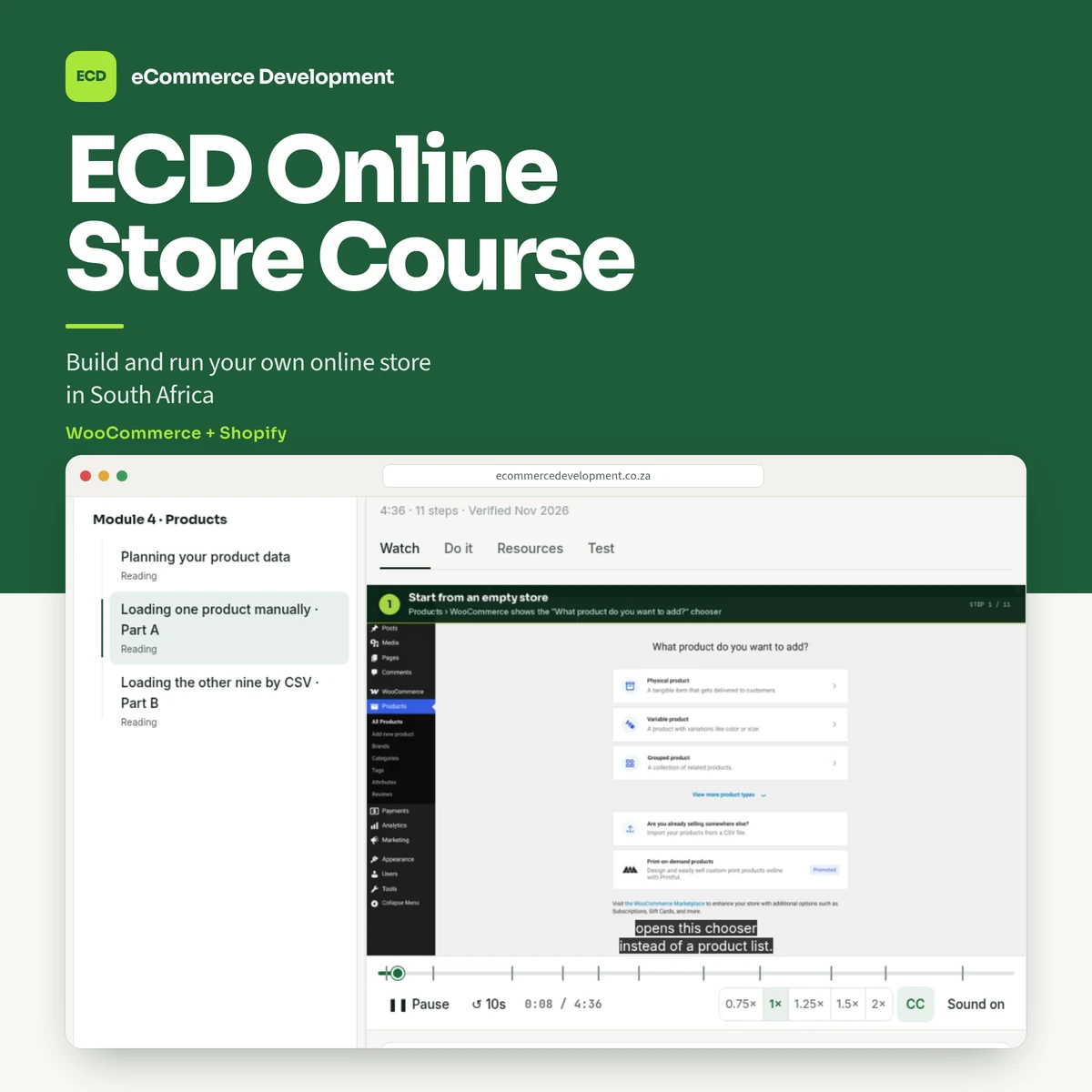
New: the ECD online store course for South African businesses
I have built online stores for South African businesses since 2011. From today the same process is open as a course, so you can build your own store step by step and run it yourself.
Until now there were two ways to get an online store. You could pay for a build, which starts from R15,000 with us, or you could work it out alone from tutorials made for other countries. The ECD Online Store Course is a third option: you do the work, and the lessons show you each step on the real screens.
What is in the course
There are 55 lessons in 14 modules. They run in the order you would build a store.
- Module 0. How this course works
- Module 1. What you are deciding: WooCommerce or Shopify, with real rand costs
- Module 2. Design before you build
- Module 3. Build the skeleton
- Module 4. Products
- Module 5. Payments
- Module 6. Legal pages
- Module 7. Shipping and couriers
- Module 8. The monthly bill
- Module 9. Apps and plugins
- Module 10. AI for your store
- Module 11. SEO foundations
- Module 12. Launch week
- Module 13. When this stops being DIY
How a lesson works
Each lesson has four parts.
- Watch. A video of the real screens, split into steps you can jump between.
- Do it. A checklist of what to do on your own store before you move on.
- Guide. A PDF guide you can print and keep next to you.
- Test. A short test to check the step landed.
Your progress is based on what you have built, not on how many videos you have watched. You can try a full lesson from Module 4 on the course page before you pay.
Inside one lesson: loading your first product
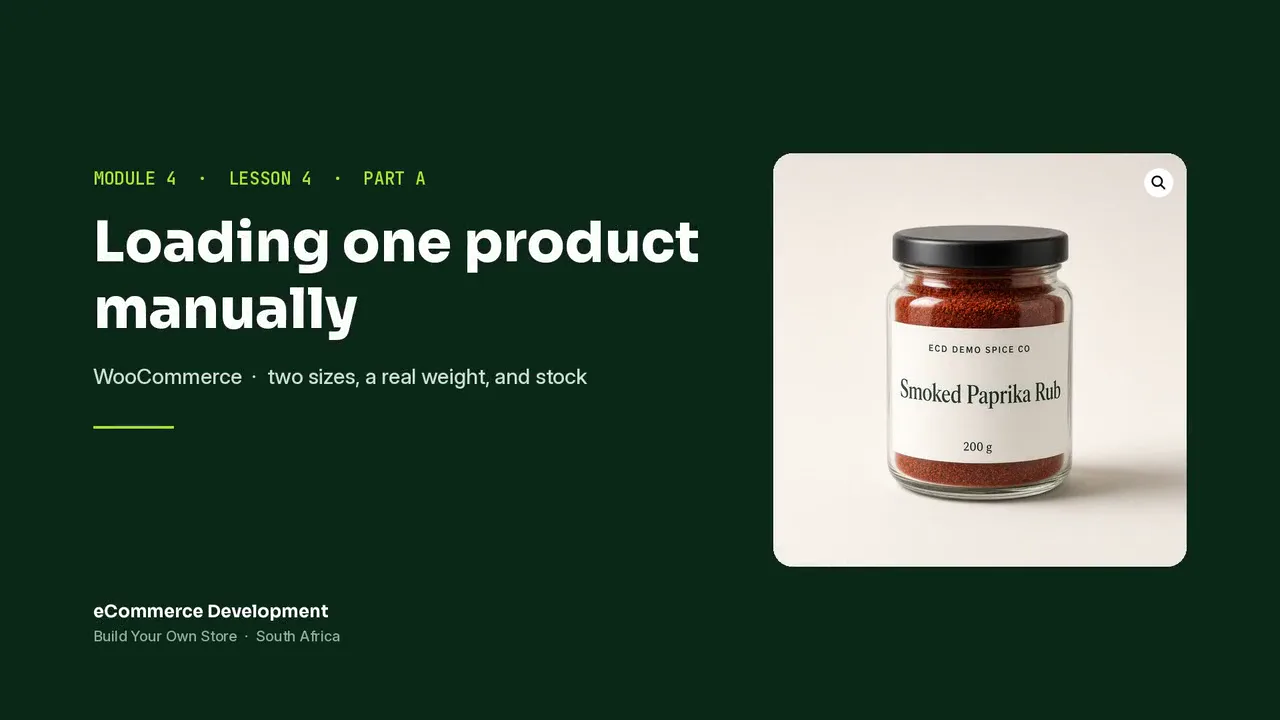
These are real screens from the Module 4 lesson on the WooCommerce track. By the end of it you have one product live on your store, with two sizes, prices, stock and SKUs.
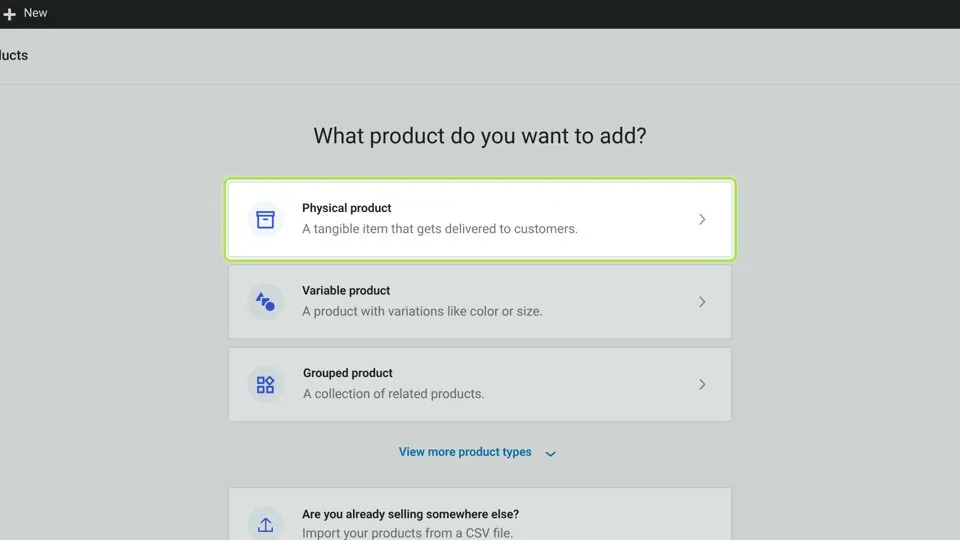
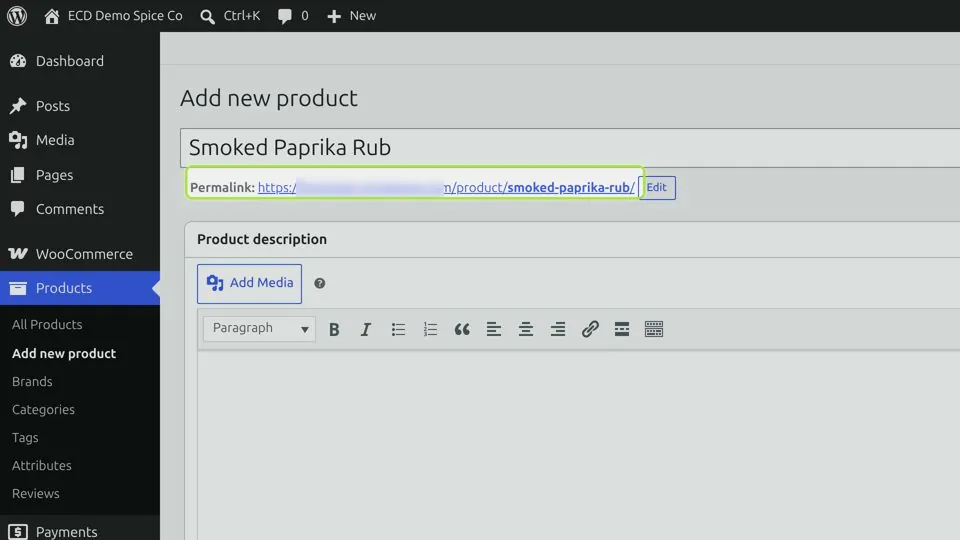
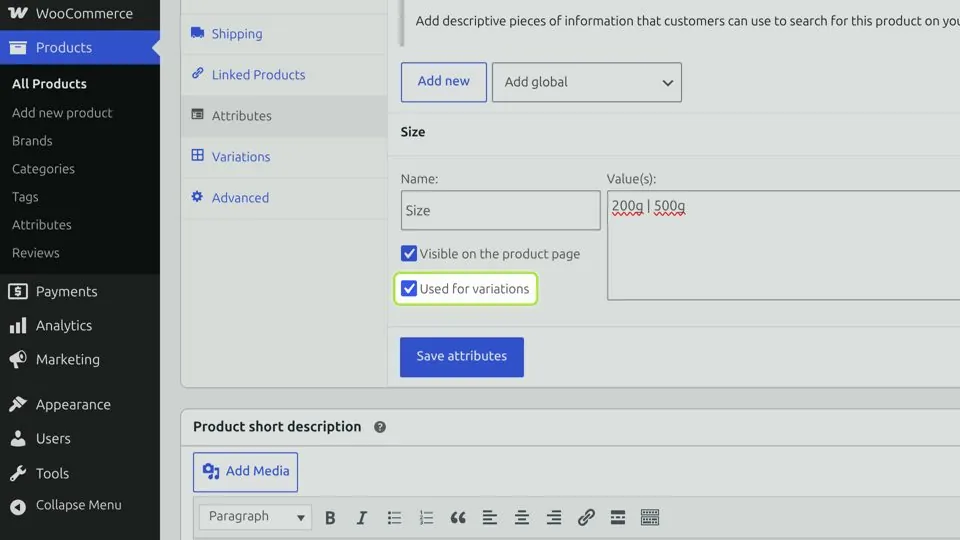
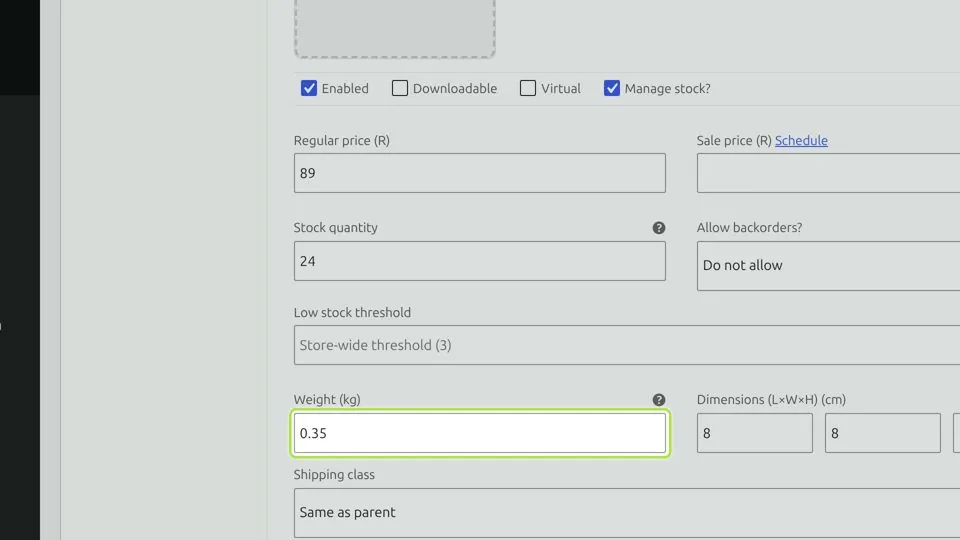
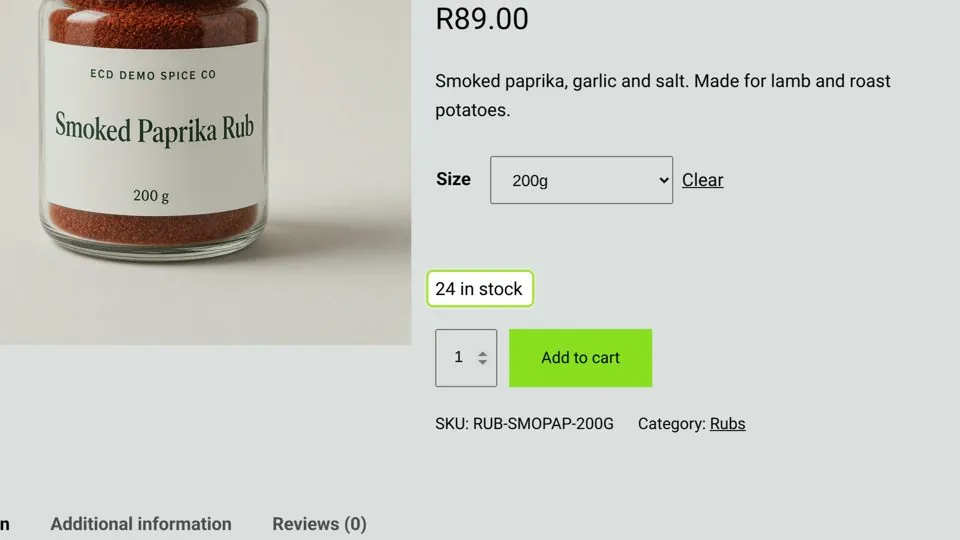
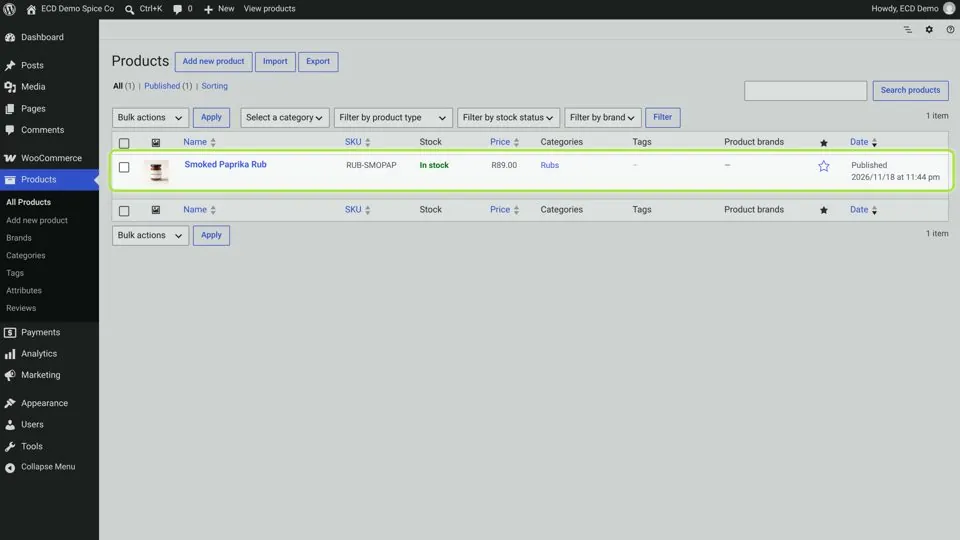
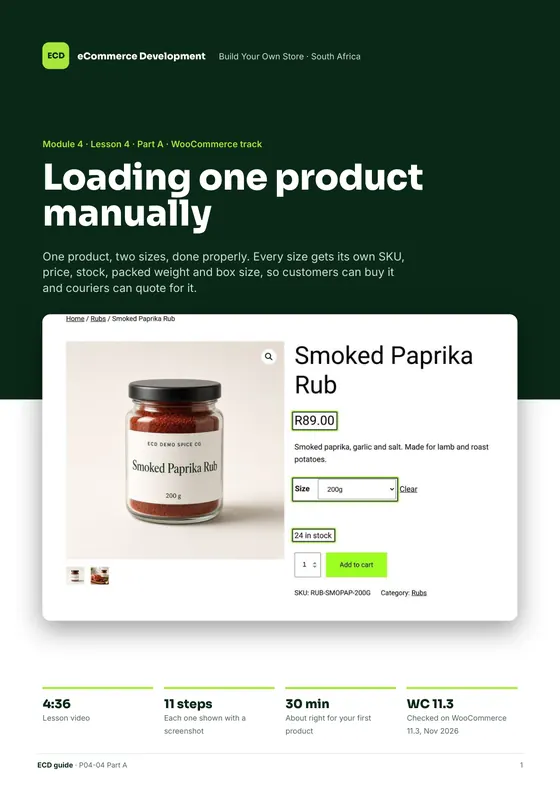
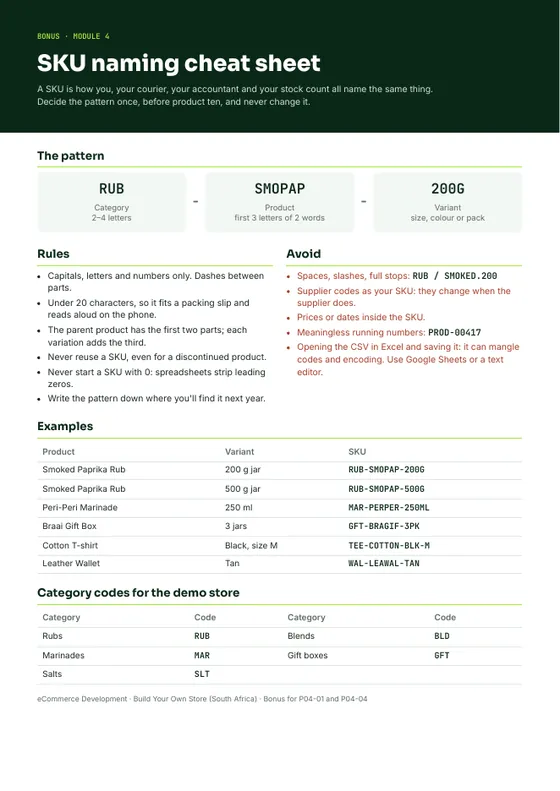
Each lesson also comes with guides to download and print. This one has the lesson guide and a SKU naming cheat sheet.
Try this lesson free on the course page →
Made for South Africa
Most store-building tutorials assume you are in the United States. This course does not.
- Prices in rand. As a rough guide, a small WooCommerce store costs about R800 a month before sales and a Shopify store about R1,070. Payment and courier costs come on top, per order.
- Payments South Africans use. The course recommends Pay@ Gateway, which covers cards, EFT, Capitec Pay and cash at the till. Yoco and Ozow are covered as alternatives. I also work for Pay@, so weigh that recommendation with that in mind.
- Couriers. Module 7 sets up courier rates and delivery zones.
- The law. Module 6 covers the pages a store needs under POPIA, the Consumer Protection Act and the ECT Act.
WooCommerce and Shopify are both included
You do not have to choose a platform before you buy. Modules 0 to 2 are the same for both, and Module 1 helps you choose using your own numbers. After that you follow the WooCommerce track or the Shopify track. Pay@ has no Shopify app yet, so on Shopify you use one of the gateways that work there, and the Shopify track compares them.
What it costs
The course is R995 once-off until 31 December 2026. From 1 January 2027 it is R1,995. You get lifetime access, and the lessons are refreshed twice a year.
You pay through Pay@ by card, EFT, Capitec Pay, or cash in store at over 10,000 retail points. Your access opens as soon as the payment is confirmed.
If you change your mind within 7 days of paying and have not opened a lesson, email shop@ecommercedevelopment.co.za for a full refund. Once you open a lesson there are no change-of-mind refunds. This does not affect your rights under the Consumer Protection Act.
What the course is not
There are no calls and no one-to-one sessions. Help is written, on every step and in every guide. For a problem with the course itself, email shop@ecommercedevelopment.co.za.
If you would rather not build the store yourself, we still do that. Ask for a quote and you will have it within 24 hours.
Want the overview first? Read how to start an online store in South Africa, which covers the same steps in one page.

We have built 400+ online stores for South African businesses since 2014. Read more about eCommerce development in South Africa.