
How to sell clothing and fashion online in South Africa
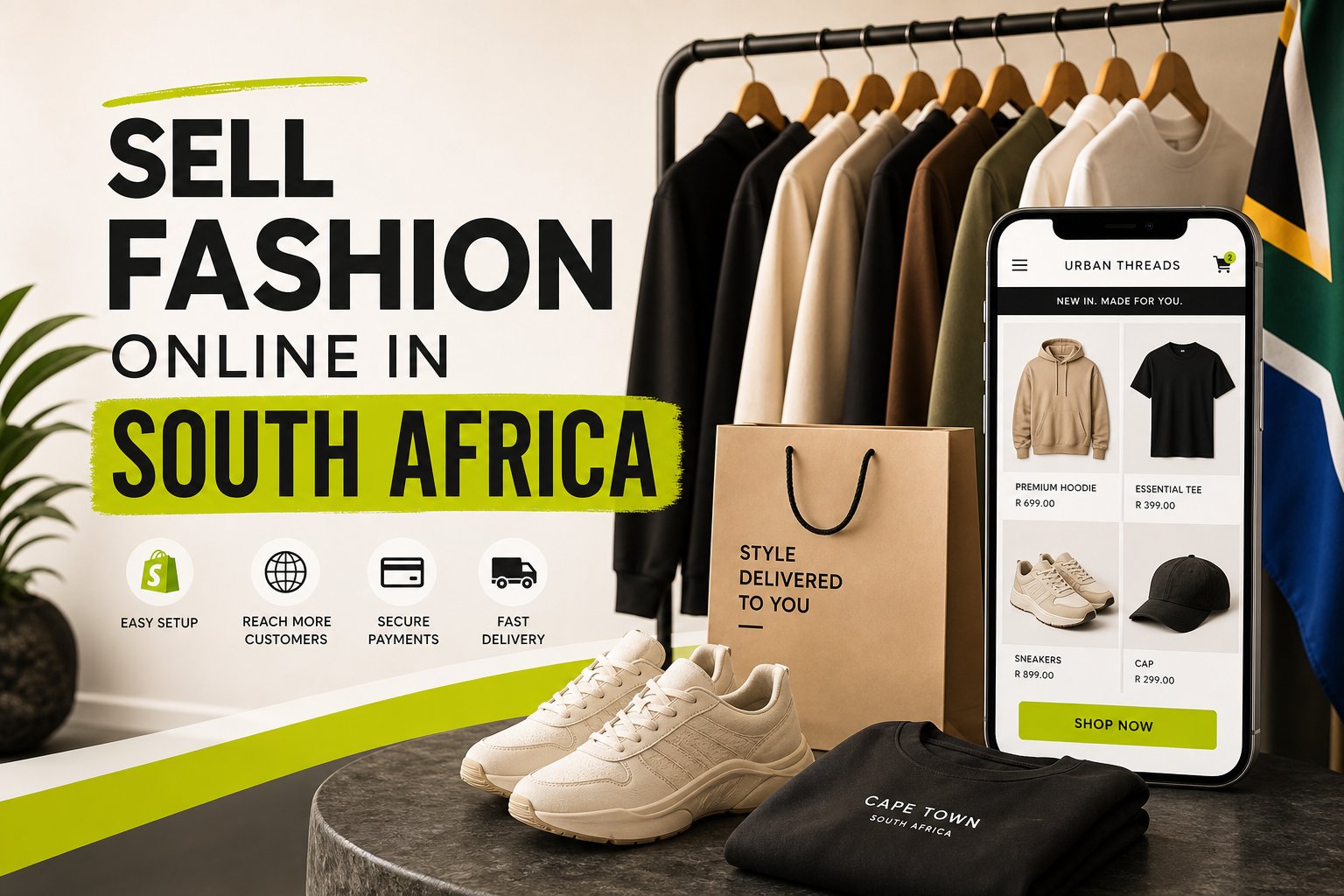
Fashion is one of the biggest and most competitive online categories in South Africa — and one of the trickiest to get right, thanks to sizing, returns and the need to sell a look, not just a product. Here’s a practical guide to building a clothing store that actually converts in the SA market.
Clothing and fashion is one of the most popular categories for South Africans shopping online — and one of the most demanding to sell well. The fundamentals of running a good store apply, but fashion adds its own challenges: customers can’t try things on, sizing is a minefield, returns run higher than in any other category, and you’re not just selling a garment, you’re selling a look and a feeling. Get these fashion-specific things right and the category is hugely rewarding; get them wrong and you drown in returns and abandoned carts.
This is a practical guide to selling clothing online in South Africa — the things that matter specifically for fashion, on top of the general store fundamentals we cover elsewhere. Whether you’re launching a boutique, a streetwear label or a fashion reseller, these are the levers that decide whether it works.
Four levers decide a fashion store
On top of the usual store basics. Photography is where the budget goes first.
1. Photography is your product
In fashion, your images are the product as far as the customer is concerned — they can’t touch the fabric or try it on, so the photos carry the entire sale. This is the single biggest lever in fashion ecommerce. Invest in:
- Multiple angles — front, back, side, detail shots of fabric, stitching, hardware.
- On-body shots — the garment on a real person, ideally showing how it moves and fits, not just flat-lay.
- Scale and fit cues — show the model’s height and what size they’re wearing so customers can judge fit.
- Consistent, clean styling — a cohesive look across your catalogue builds a brand, not just a product list.
- Video where possible — even short clips of the garment moving dramatically reduce uncertainty.
Great photography reduces returns (customers know what they’re getting) and lifts conversion. It’s where your budget should go first.
2. Solve sizing — it’s your biggest returns driver
Sizing is the number-one cause of fashion returns, and South Africa has the added complication that sizing isn’t always consistent across brands. Tackle it head-on:
- Detailed size guides with actual measurements (in cm), not just “S/M/L.” Tell customers how to measure themselves.
- Per-product fit notes — “runs small, size up,” “relaxed fit,” “true to size.”
- Model reference — the model’s measurements and the size they’re wearing.
- Consistency — standardise your own sizing across the range so customers learn to trust it.
Every sizing question you answer before purchase is a return you prevent. Sizing clarity is one of the highest-return investments in a fashion store.
3. Plan for returns — fashion’s reality
Fashion has the highest return rate of any ecommerce category, full stop — people order, try at home, and send back what doesn’t work. You can’t eliminate this, so build for it: a smooth, clearly-communicated returns process (compliant with the Consumer Protection Act), returns factored into your margins and pricing, and a reverse-logistics setup that isn’t painful (see the shipping guide). A frictionless returns experience also paradoxically increases sales — shoppers buy more confidently when they know returning is easy. Treat returns as a cost of doing fashion, not a failure.
Where fashion returns come from
The cycle, and where each fix in this guide cuts in.
4. Sell the brand and the look
Fashion is emotional and identity-driven — people buy how a piece makes them feel and what it says about them. A bare product catalogue underperforms a store with a clear brand identity, aesthetic and story. Lean into: strong, consistent visual branding; lifestyle and editorial content (not just product shots); a point of view (who is this for?); and social proof through real customers wearing your pieces. This is also why fashion thrives on visual social channels and user-generated content — which feeds directly into your marketing.
5. The right tools for a fashion store
- Photo reviews — visual social proof is gold in fashion. An app like Loox that showcases customer photos is especially powerful here (see our reviews app comparison) — real people wearing your clothes sells better than any studio shot.
- Good search and filtering — fashion catalogues are large and variant-heavy (size, colour), so customers need to filter by size, colour, category fast (see the Searchanise review).
- Visual social channels — Instagram, TikTok and Meta ads are where fashion discovery happens; your photography doubles as ad creative.
- A fast, mobile-first store — fashion shopping is overwhelmingly mobile and visual, so speed and a flawless mobile experience are critical (see mobile commerce in SA).
6. The SA fashion market context
A few local realities: you’re competing with big established players (Superbalist, Zando, the retail chains’ online stores) so a clear niche or distinct brand matters more than trying to be everything; SA shoppers expect the local essentials — ZAR pricing, local delivery, instant EFT and increasingly Buy Now Pay Later (which performs especially well in fashion, where a R800 item becomes four easy payments); and the cautious-shopper trust factors (reviews, clear returns, real contact details) matter as much here as anywhere. A focused, well-branded niche store can absolutely carve out space against the giants — it just can’t out-generalise them.
Frequently asked questions
The bottom line
Selling clothing online in South Africa is a big, rewarding opportunity and a demanding one. On top of the usual store fundamentals, fashion lives or dies on a few category-specific levers: photography that does the selling, sizing clarity that prevents returns, a returns process built for the highest-return category there is, and a brand and aesthetic that sell a look rather than just a list of products. Add the SA essentials — local payments, BNPL, mobile-first, trust signals — and a focused niche brand can compete even against the big players. Nail the fashion-specific parts and the category rewards you well.
If you’d like a fashion store built to convert — one designed around great imagery, sizing, filtering and a brand that sells the look — that’s exactly the kind of store we build. Tell us about your label and we’ll help you build something that stands out.

We have built 400+ online stores for South African businesses since 2014. Read more about eCommerce development in South Africa.